Before recommending any suspension or chassis-related repair, our technicians can also perform an undercarriage inspection using a specialised play detector machine. The machine moves the wheels and suspension components under controlled conditions, allowing our technicians to observe excessive movement, looseness, or play that may not be obvious during a normal visual inspection.
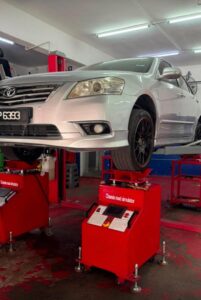
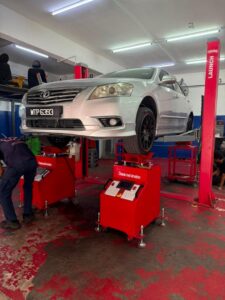
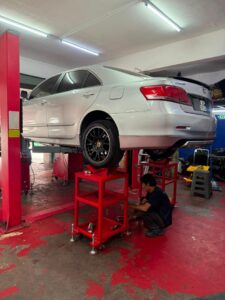
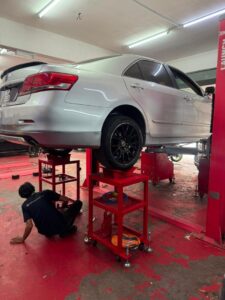
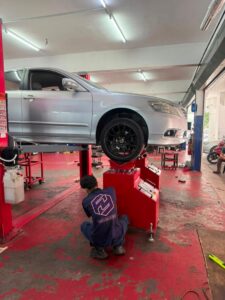
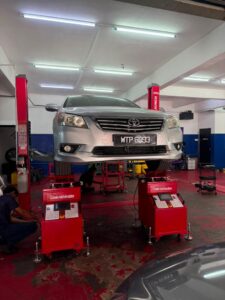
This inspection helps identify potential issues with critical undercarriage components such as lower arms, bushes, ball joints, tie rods, tie rod ends, stabilizer links, wheel bearings, and other steering and suspension components.
A component may look fine from the outside but still have excessive movement when subjected to controlled movement. By using the play detector, our technicians can better pinpoint where unwanted movement is coming from and assess whether a component requires further inspection, adjustment, repair, or replacement.
This is particularly useful if you experience knocking or clunking noises, loose steering, uneven tyre wear, steering pull, excessive body movement, or a feeling that the car is unstable when driving over uneven roads, braking, accelerating, or cornering.
The purpose of the inspection is simple: check the condition first, identify the actual source of the problem, and only then recommend the appropriate solution. This helps avoid unnecessary replacement of parts and ensures that your vehicle’s steering, suspension and undercarriage are properly assessed as part of its overall safety and stability.

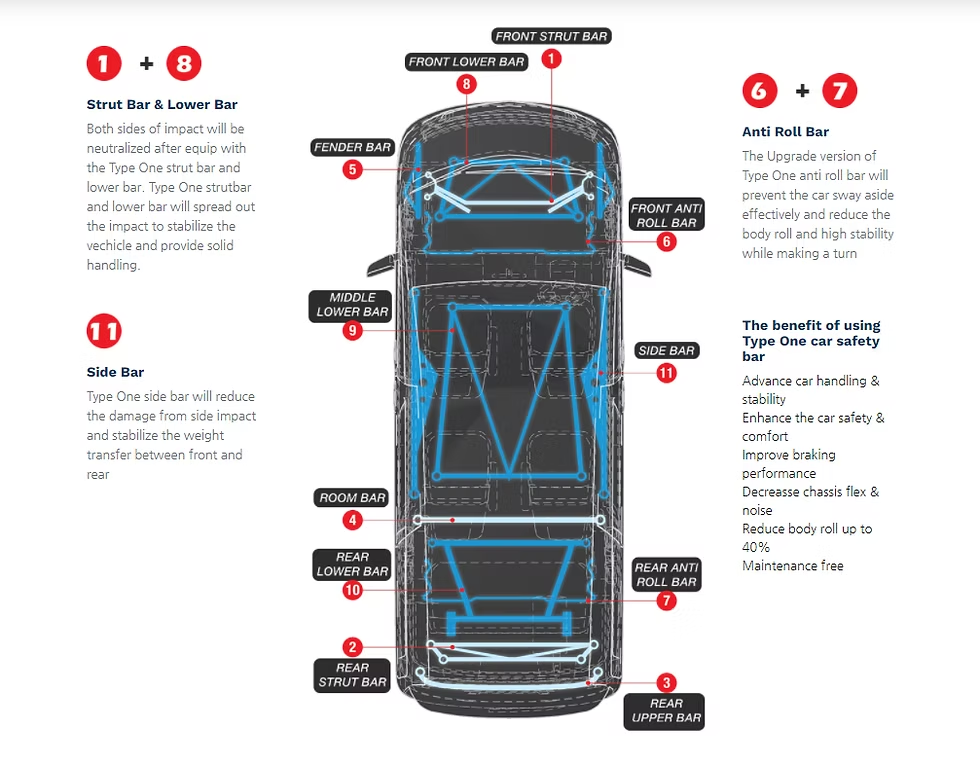
Your car’s chassis is the main structural frame that everything else, the engine, suspension, and body panels, is built around, and how rigid that chassis is has a direct effect on handling, stability, and safety. Most passenger cars are tuned for comfort first, which means a softer suspension and spring setup that rides smoothly but allows more body roll under hard cornering or emergency braking. That extra flex shifts more force to the front of the car, which can lead to vaguer steering response, reduced braking performance, and a higher chance of losing control in an emergency. Our Safety & Stability service addresses this by fitting quality multi-point strut bars and chassis-strengthening bars, including trusted brands like TYPE ONE, a Malaysian strut bar manufacturer established in 2017 known for its extensive testing and even stress distribution across the chassis. A strut bar creates a direct connection between the suspension towers, and often the engine bay, which are normally only linked through the car’s body panels and therefore prone to flexing independently as the car corners.
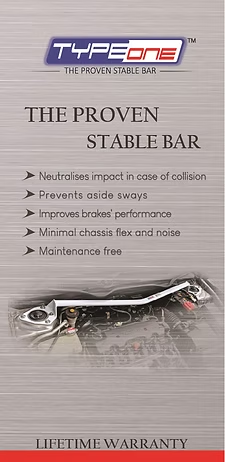
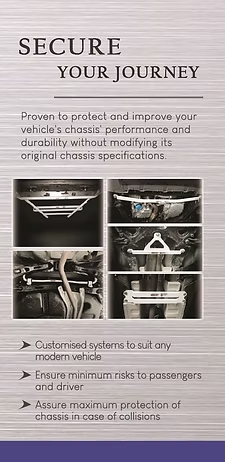
By bracing these points together, a strut bar significantly reduces chassis twist, keeping both sides of the suspension working together rather than moving separately, resulting in sharper, more predictable handling with no permanent modification to your vehicle. Chassis flex becomes especially noticeable during fast cornering, sudden braking, and hard acceleration, when weight transfers unevenly from one side of the car to the other. This uneven loading can cause the chassis to twist and deform slightly, which is often the underlying cause of understeer, oversteer, and reduced tyre grip during spirited driving.

Reinforcing the chassis with a properly engineered strut bar helps distribute these forces more evenly, keeping the car’s geometry stable and your tyres gripping the road as intended. Quality matters when it comes to strut bars, which is why we only fit bars built and tested to a high standard.
Reputable manufacturers subject their bars to bending, torsion, and flex testing: bending tests measure how the bar holds up under direct pressure from both sides, torsion tests simulate real chassis twisting forces using a specialised harness, and flex tests apply gradual torque to replicate how the bar performs under everyday chassis flex. Bars built from thick-walled steel tubing, typically 1.4mm to 1.6mm, paired with reinforced steel mounting brackets around 4.5mm or thicker are able to absorb impact energy safely, protecting the chassis and its occupants in the event of a collision while still delivering a more solid, responsive drive.
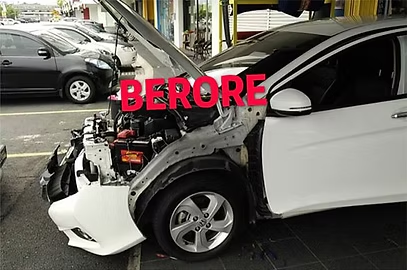
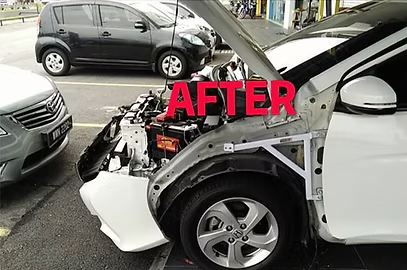
Our technicians can advise on and professionally install the right strut bar setup for your specific make and model, whether you’re after sharper day-to-day handling or a more track-focused setup.
Recommend suitable strut bar for your vehicle and driving needs
Fit multi-point strut bar to suspension towers and engine bay
Torque check and final handling test
| Bar Material | Steel Tubing (1.4mm-1.6mm Wall Thickness) |
|---|---|
| Mounting Brackets | 4.5mm+ Steel Plate |
| Testing Standard | Bending, Torsion & Flex Tested |
| Installation | Bolt-On, No Chassis Modification |
No, strut bars are designed as a bolt-on accessory with no permanent modification to your vehicle's chassis.
A quality strut bar mainly improves chassis rigidity and handling precision; ride comfort is generally not significantly affected.
A strut bar reduces chassis flex for sharper handling, while lowering springs mainly change ride height and centre of gravity; many customers combine both for the best results.
“Noticeable improvement in cornering stability after fitting the strut bar.”
— Haziq“Quick installation, car feels so much tighter on the road.”
— Jason